Is the Samsung Q600F Still Good in 2026? Long-Term Review
I've been using the Samsung Q600F as my primary TV audio for well over a year and a half, and in that time I've put it through movies, music, gaming sessions, and everyday television. In my experience, some parts of this soundbar have aged surprisingly well, while others show their age compared to more recent releases. What I found was a reliable upgrade over built-in TV speakers in nearly every meaningful way, but not a perfect, future-proofed home theater solution in 2026.
Why I bought the Q600F and how I used it
I wanted a compact, easy-to-install solution to improve dialogue clarity and provide fuller sound for movies without building a full surround setup. I wasn't chasing the latest spatial audio features — I live in an apartment and prioritize simplicity and good bass — so the Q600F appealed as a midrange Samsung soundbar that promised better vocal clarity and a wireless subwoofer for low end. After months of daily use, here's what I learned.
Setup and day-to-day experience
Setup was straightforward. I connected the soundbar to my TV using HDMI ARC and also tried optical and Bluetooth for phones. In my experience the HDMI connection gave the most consistent performance: latency was low for gaming, and switching inputs was smooth. Bluetooth worked fine for casual music playback, though I noticed slight compression compared with wired or HDMI audio.
One thing I appreciated right away was how quickly the Q600F improved TV dialogue. I watch a lot of news and talk-heavy dramas, and the soundbar made words clearer without me needing to crank the volume. The remote and the TV's own volume control integrated well, so I didn't have to manage another volume level most of the time.
Sound performance: movies, music, and gaming
In movie mode, the Q600F delivers a punchier, more cinematic sound than the TV alone. Explosions and action sequences have energy and the wireless subwoofer fills the low end in a satisfying way for its size. I found bass to be present and tunable — it can thump when the mix calls for it, but it's not deep enough to reproduce the authority of a dedicated sub in a larger room. For apartment-level use and mid-sized living rooms, that balance worked well.
For music, my experience was mixed. Pop, indie, and acoustic tracks sounded clean and engaging; vocals were upfront and instruments were reasonably separated. However, when I tried dense, orchestral pieces or bass-heavy electronic music, the soundbar felt limited. It reproduced detail well in the midrange but didn't offer the same layering and soundstage width I get from larger systems. If you're a serious music listener who wants a wide, immersive stereo image, you'll likely want to pair the Q600F with a better stereo setup.
Gaming on my console was enjoyable. I noticed clear positional cues and low latency with the HDMI connection, which mattered in fast shooters. The soundbar's transient response made footsteps and directional effects discernible, though, again, the immersion wasn't on par with a true surround or Atmos-enabled system.
Features and usability
There are a few features I really liked: an easy-to-use remote, reliable wireless subwoofer pairing, and preset sound modes that were useful for quick changes (movie, music, voice, standard). The Samsung app gave me basic EQ adjustments and allowed me to check firmware status. I was pleased to see occasional firmware updates that fixed minor quirks and improved wireless stability.
On the flip side, what I noticed that bothered me was the lack of some modern conveniences that have become common by 2026. For example, the Q600F doesn’t have the same level of spatial audio processing or height-channel virtualization that newer soundbars offer. Voice assistant integration is minimal, and there’s no native support for the latest wireless audio codecs. If you value advanced surround virtualization or direct smart-assistant control from the bar, the Q600F shows its age.
Shop the latest Audio & Headphones picks on Amazon.
Browse Now →Build quality and design
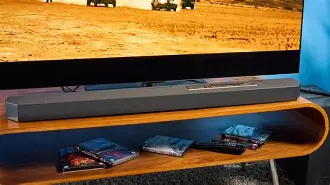
I've had no mechanical issues: the grille hasn't dented, the finish shows normal wear, and the wireless sub stayed reliably connected. The design is unobtrusive — it sits well under my TV without drawing attention. One design annoyance for me was the placement of some buttons on the back, which made manual control slightly awkward if you mount the bar close to the TV stand. But overall, durability and fit-and-finish have been solid.
Long-term reliability
After months of daily use, I haven't had failures or major performance drops. The speakers haven't developed any distortion at reasonable volumes, and the subwoofer maintains its output. My only long-term annoyance is occasional Bluetooth reconnection quirks with certain phones — a quick power-cycle of either device usually clears it. In my experience with this unit, routine firmware updates helped keep things stable.
Pros & Cons
- Pros:
- Clear, natural dialogue — makes TV and streaming shows much easier to understand.
- Good low-end presence from the wireless sub for its class — room-filling without being overwhelming.
- Simple setup and integration with most TVs (HDMI ARC/optical).
- Solid build quality and unobtrusive design that fits smaller living rooms or apartments.
- Reasonable firmware support and occasional software tweaks from Samsung.
- Cons:
- Lacks advanced spatial audio and height-channel processing that many newer soundbars include.
- Not ideal for audiophiles — music detail and soundstage are limited compared to dedicated stereo systems.
- Limited voice-assistant and smart-home integration out of the box.
- Bluetooh reconnection quirks with some devices; not the most modern wireless codec support.
- Bass is good for its size but won’t replace a proper, larger sub in big rooms.
How the Q600F stacks up in 2026 — comparison table
| Category | Samsung Q600F (my experience) | Typical modern midrange soundbar (2026) | Budget soundbar |
|---|---|---|---|
| Dialogue clarity | Very good — vocal-forward tuning that helps TV watching | Very good — often with improved AI voice enhancement | Average — often muffled without dedicated dialogue modes |
| Bass & low end | Solid for size — wireless sub provides satisfying thump | Better — deeper sub integration and adjustable DSP | Poor to average — sub often optional or small |
| Spatial/surround | Moderate — some widening but not immersive | Strong — height virtualization and object-based processing common | Weak — mostly stereo or simulated surround |
| Connectivity | HDMI ARC, optical, Bluetooth — reliable | HDMI eARC, multiple inputs, Wi‑Fi streaming, low-latency Bluetooth codecs | Optical + Bluetooth — limited inputs |
| Smart features | Minimal — app controls and firmware updates | Often includes voice assistants, multiroom, and better app EQ | Rare or basic |
| Value in 2026 | Good if found at a discount or already owned | Best for futureproofing and immersive features | Best for tight budgets |
Who should consider the Q600F in 2026?
In my experience, the Q600F still makes sense for several types of buyers:
- People upgrading from TV speakers who want clear dialogue and fuller sound without complex setup.
- Those on a modest budget who can find the Q600F used or discounted — it delivers reliable performance for casual movie watching and music.
- Apartment or small living-room owners who prioritize compactness and a non-invasive footprint.
However, I would advise against choosing the Q600F if any of these apply to you:
- You want immersive height effects or native Dolby Atmos support — newer models do a better job of simulating vertical sound stages.
- You plan to expand to a full wireless surround or multiroom ecosystem — modern bars with Wi‑Fi and smart ecosystem support are easier to integrate.
- You’re an audiophile who values deep soundstage and high-fidelity music playback — the Q600F is competent, not exceptional.
Buying guide: what to consider before you buy
After living with the Q600F, here are practical questions I asked myself and suggest you ask too before buying any soundbar in 2026:
1. Room size and placement
In my experience, smaller rooms benefit the most from compact soundbars like the Q600F. If you have a large, open plan room, expect the subwoofer to struggle to fill the space without help. Measure the listening distance and consider whether you need an external subwoofer or additional rear channels.
2. What kind of content do you watch mostly?
If you watch dialogue-heavy shows and live TV, prioritize clarity and selectable voice modes. If you’re focused on cinematic blockbusters or object-based audio, look for bars with Atmos and height virtualization.
3. Inputs and futureproofing
Think about how you connect devices. I used HDMI ARC with the Q600F and found it reliable, but if you want the most bandwidth for Dolby Atmos passthrough and high-res audio, prefer soundbars with HDMI eARC and multiple HDMI inputs.
Looking for the best Audio & Headphones deals on Amazon?
View Offers →4. Expandability
Decide if you might want rear surrounds or a bigger sub later. Many modern bars support wireless rear speakers or subwoofers that work with the same ecosystem. The Q600F is good as a stand-alone solution, but some newer systems are designed to be more modular.
5. Smart features and streaming
Do you want built-in voice assistants or multiroom streaming? If yes, check whether the soundbar supports popular ecosystems (AirPlay, Chromecast, Alexa, Google Assistant) and app-based control. In my case I didn't miss it terribly, but other users find this essential.
6. Budget and second-hand options
I found that the Q600F offers one of the more consistent value propositions if picked up used or during a discount window. If you're shopping used, check firmware version and test Bluetooth and HDMI behavior before buying.
Practical tips based on my experience
- Place the soundbar slightly away from the TV edge if possible to avoid vibrations and to let the speakers breathe — it improved clarity for me.
- Spend a few minutes with the EQ presets and subwoofer level. The difference between “Movie” and “Standard” modes was meaningful in my listening tests.
- If you stream via phone often, try Bluetooth and wired playback to learn their differences — I preferred wired/HDMI for critical listening.
- Keep firmware updated. I noticed small stability and connectivity improvements after updates.
Conclusion — my final verdict in 2026
After months of hands-on use, my conclusion is that the Samsung Q600F is still a good device in 2026, but its value depends on your expectations. In my experience it consistently elevates television viewing with clear dialogue and a satisfying low end from the wireless subwoofer. It’s dependable, easy to set up, and durable.
That said, the Q600F does show its age next to newer midrange soundbars: it lacks advanced spatial audio features, deep smart-home integration, and some of the input modernity (like universal eARC and multiroom streaming) that many buyers expect today. If you already own one, I don’t see a pressing reason to upgrade unless you specifically want Atmos, stronger multiroom features, or a larger soundstage for music. If you’re buying new in 2026, the Q600F is a sensible choice only if you can get it at a good discount or you prefer its simple, reliable approach over the bells and whistles of newer models.
In short: I was pleasantly surprised by how well it handled everyday TV and casual movie nights, but if immersive spatial audio or futureproof connectivity is high on your list, I’d explore current models before deciding. For straightforward, dependable audio that beats your TV’s speakers by a wide margin, the Q600F still holds up.