Rog Keris Review: Real User Experience After 3 Months
Category: Electronics
Introduction — why I bought the ROG Keris and what I tested
I've been using the ROG Keris for three months as my primary mouse for work, casual gaming, and a few competitive sessions. I bought the wireless version because I wanted the freedom of no cable without sacrificing responsiveness, and I was curious whether Asus' gaming mice could compete with the usual suspects on my desk. In this review I'll share concrete things I liked, the annoyances I encountered, and how the mouse held up over time.
What I tested: daily productivity (office apps, browser with many tabs), photo editing, a handful of competitive first-person shooter sessions, and long writing sessions. I used the mouse on a matte desk pad and occasionally on a glass surface with a small cloth underneath for stability.
Initial impressions and build quality
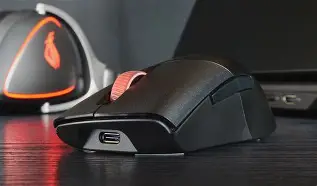
Out of the box the ROG Keris felt well made and thoughtfully packed. The shell has a matte finish that doesn't show fingerprints as quickly as glossy mice, and the texture gives just enough grip without being abrasive. I appreciated that the seams and plastic tolerances were tight — nothing wobbled or creaked, even after I swapped grip positions a lot while testing.
What I found was a balance between lightweight feel and a reassuring solidness. The mouse doesn't feel fragile; instead it has a slightly denser feeling than ultralight honeycomb designs while still being much lighter than older office mice. I liked that in day-to-day use: it was easy to flick and reposition, but it didn't feel like it would break if I set it down hard.
Buttons, scroll wheel, and switches
The main clicks are crisp and immediate. I've been using the mouse heavily for three months and the tactile feedback has remained consistent — no mushiness or double-clicking so far. The side buttons are positioned in a slightly recessed area which reduces accidental presses; I liked that because I often rest my thumb while browsing. The scroll wheel is grippy and clicks firmly, with a slightly audible but not annoying detent.
One thing I noticed: the right-click is marginally heavier than the left-click. It didn't affect my play, but during long editing sessions I sometimes found myself favoring the left for quick macros. I was surprised by how long it took me to notice that — this is a subtle asymmetry, not a flaw.
Sensor performance and real-world accuracy
In my experience the sensor is accurate and consistent. Across office tasks, image editing, and FPS sessions the cursor tracked where I expected it to. I tested low-sensitivity flick shots in-game and did not see any obvious interpolation or jitter. The lift-off distance is low and consistent; I found it easy to reposition the mouse without introducing cursor drift.
What I found was reliably precise performance even at higher DPI settings. I don't typically use extremely high DPI, but I tested across a range and the transitions felt smooth. There were no surprise skips or stuttering during rapid movements.
Wireless reliability and latency
Wireless performance was a key factor for me. I used the 2.4 GHz dongle positioned directly on my desk and also tried Bluetooth for some low-power sessions. For competitive play I stuck with the dongle and experienced no noticeable input lag compared to my wired reference mouse. What I appreciated was the stable connection during long matches — no dropouts, no rapid reconnections, and no visible added latency.
That said, when using Bluetooth I noticed a slightly less responsive feel (as expected). Bluetooth is fine for browsing, media, or light productivity, but I wouldn't rely on it for tight competitive play.
Shop the latest Electronics picks on Amazon.
Browse Now →Battery life and charging
Battery life is one area where my expectations were tempered by real use. In my experience the mouse lasted roughly a week with moderate daily use and RGB lighting enabled. Turning RGB off extended that to closer to two weeks. I was surprised by how quickly the RGB drained the battery when I set it to bright, dynamic effects.
Charging is straightforward with USB-C and the cable feels sturdy. I liked that the mouse still worked while charging. One minor annoyance: the mouse doesn't report battery percentage in all apps consistently — Armoury Crate shows it, but sometimes Windows' native battery indicator lags or doesn't appear until after a driver update. It's not a major issue, but if you rely on a system tray percentage you may find it inconsistent.
Software — customization and quirks
I configured the Keris through Asus' Armoury Crate. What I found was a feature-rich app: DPI profiles, button remapping, polling rate options, RGB control, and per-profile macros. I appreciated being able to save profiles to onboard memory so the mouse behaves the same on different machines without reinstalling software.
That said, Armoury Crate can feel bloated. It runs multiple background services and, at times, it prompted updates in a way that interrupted my workflow. I was frustrated by one occasion where an update changed my DPI profile and I didn't notice until a match started. If you value lightweight, unobtrusive software, be prepared to accept a bit of overhead.
Ergonomics, grip comfort, and long-term use
Ergonomically the Keris suits a variety of grips — I switched between palm and claw while using it. With my medium-sized hands (I have an average palm width), the shape felt natural and allowed both relaxed browsing and tight flicks. I noticed that fingertip grip users will also be comfortable, though the back of the mouse is slightly higher than pure fingertip designs.
After three months of heavy use I did not develop any hotspots or discomfort. The matte finish stayed comfortable; it didn't become sticky or abrasive. One ergonomic downside: the left side has a small ridge near the front which I initially thought would help thumb placement, but after long sessions I found it slightly intrusive when using a full-palm grip. It wasn't a dealbreaker, but it is the kind of small ergonomic detail that matters to some people.
Durability and wear after 3 months
I've used the mouse daily for three months and it's holding up well. The feet show minimal wear and still glide smoothly on my pad. The left and right clicks maintain their crispness. The only visible change is a very slight glossing on the most-used thumb area, which is normal with any mouse and doesn't affect grip.
One area to watch: the USB-C port has been fine so far, but because I charged frequently I paid attention to the fit of the cable. There's a little play when the cable is plugged in and the mouse is lifted while charging, but that felt expected given the frequent plugging/unplugging. Long-term, I'd advise treating the port gently.
What I appreciated most
In my experience the standout things were the reliable wireless performance, the overall comfortable shape for varied grips, and the consistent click feel. I liked that the mouse felt competitive in responsiveness while still being comfortable enough for long work sessions. The onboard memory and profile switching worked well, which made moving between my laptop and desktop painless.
What disappointed me
What I found disappointing was the software overhead and the battery impact of RGB modes. Armoury Crate is powerful, but it sometimes felt like too much background noise for the value it adds. I also wished the battery lasted longer on a single charge with RGB enabled. Finally, the small thumb ridge that annoyed me in palm grip sessions is a detail that ASUS could have smoothed out.
Shop the latest Electronics picks on Amazon.
Browse Now →Pros & Cons
- Pros:
- Reliable wireless performance for competitive and casual play
- Comfortable shape for both palm and claw grips
- Crisp, consistent main clicks that have held up over three months
- Onboard memory for profiles — works well when switching machines
- Matte finish resists fingerprints and stays comfortable
- Cons:
- Armoury Crate can be bloated and occasionally intrusive
- RGB significantly reduces battery life if left on bright effects
- Small ergonomic ridge can bother full-palm users during long sessions
- Battery percentage reporting can be inconsistent outside Armoury Crate
Quick comparison — ROG Keris vs common lightweight mice
| Model | Weight class | Grip style | Connectivity | Best for |
|---|---|---|---|---|
| ROG Keris | Lightweight | Claw / Palm (also fine for fingertip) | Wireless (2.4 GHz & Bluetooth), Wired | Balanced use: competitive FPS and daily productivity |
| Logitech G Pro (light variants) | Ultra-light | Ambidextrous — versatile for many grips | Wireless, Wired | Competitive esports players prioritizing minimal weight |
| Glorious Model O | Ultra-light (honeycomb shell) | Fingertip / Claw | Wired (wireless variants available) | Budget-minded users wanting very light wired performance |
Buying guide — what to consider before you buy
I've been through several mice and here are the practical things I paid attention to while deciding if the ROG Keris fit my needs. Use these points to make your own choice.
1. Which grip do you use most?
If you primarily use a full palm grip, check the mouse's back height and where your palm contacts it. I noticed the Keris has a slightly pronounced rear which suited my medium hands for both palm and claw, but if you have large hands you might prefer a larger-bodied mouse.
2. Is wireless a must?
Wireless convenience is great, but know your priorities: if you play competitively, ensure the mouse's 2.4 GHz dongle provides stable, low-latency performance. I've been satisfied with the Keris' dongle performance. If absolute minimal weight is your priority, some wired or ultra-light ambidextrous mice still beat wireless options.
3. Battery life vs RGB
Decide whether you want RGB at all times. With the Keris, RGB looks good but cuts into battery life noticeably. If you need the longest possible uptime between charges, turn RGB off or use simple, static lighting.
4. Software and ecosystem
Consider whether you're comfortable installing vendor software. Armoury Crate gives deep customization but adds background services. If you prefer to avoid heavy software, look for mice with straightforward onboard memory and minimal driver requirements.
5. Durability and switch type
Ask about switch durability and warranty. In my experience, mechanical reliability matters more than small weight differences. The Keris has been durable for me so far; however, if you're rough on peripherals, look for higher-rated switch lifespans and check warranty terms.
6. Try before you commit
If possible, try to test a mouse at a store or borrow from a friend. Shape and feel are highly personal — the Keris’ small thumb ridge that bothered me might not bother you at all.
Final verdict
After three months with the ROG Keris, my honest take is that it's a strong, well-rounded mouse that strikes a practical balance between performance and comfort. I was pleased with the wireless reliability and the consistent click feel. The small frustrations — Armoury Crate's bloat, RGB battery drain, and a minor ergonomic ridge — are real but not showstoppers for me.
In my experience, the Keris is a good fit if you want a wireless gaming mouse that performs well in both competitive and everyday tasks, and if you value a matte finish and onboard profile storage. If you prioritize the absolute lowest possible weight or want minimal software, there may be better niche choices — but for most users looking for a high-quality, dependable mouse, the ROG Keris delivers.