S1 Pro System Honest Review — Is the Hype Justified?
I've been using the S1 Pro System for several months now in a variety of settings — from late-night home studio sessions and small rehearsal rooms to backyard gatherings and a couple of low-key open-mic nights. I bought it because the marketing promised a single, versatile speaker that could handle instrument monitoring, PA duties, and casual listening without creating a tangle of gear. After long-term hands-on time, here's my honest, first-person account of what I loved, what frustrated me, and who I think this system really makes sense for.
Introduction: Why I Bought the S1 Pro System
My setup before the S1 Pro was a mismatch of bookshelf speakers, a small powered monitor, and a cheap portable PA that I rarely used because it sounded thin. I wanted something compact with good acoustic fidelity, the ability to run off battery for outdoor jams, and enough inputs to plug in a microphone and a guitar without fumbling adapters. The S1 Pro seemed to promise all of that in one unit, and the idea of replacing multiple pieces of gear with one box was appealing.
What I set out to test over the months: tonal balance at low and high volumes, battery life in real-world use, usefulness of onboard EQ/presets, portability, and how it handled different instruments and voices. I also paid attention to ergonomics — how easy it is to set up and tweak on the fly — and durability when moved between locations.
Design and Build: Solid, Thoughtful, But Not Perfect
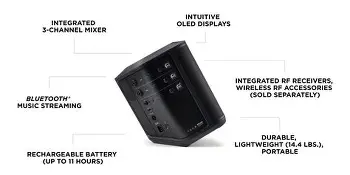
In my experience, the S1 Pro's build quality is one of its strong suits. The enclosure feels robust and well-damped — I moved it around dozens of times and never worried about rattles. The handle and form factor are designed for one-person transport, and it really is convenient to grab and go. The grille is sturdy and the controls are laid out logically on the back panel.
One thing I noticed early on was the weight: it's heavier than it looks. If you're planning to carry it long distances by hand, be ready for that. I appreciated the integrated stand options and the multiple orientation angles — in practice I used it as a floor monitor and as a low-slung PA, and both worked without needing extra hardware.
On the downside, the knobs have a somewhat plasticky feel compared to the rest of the unit, and the rubber feet can pick up dirt quickly when used outdoors. Those are small complaints, but they were noticeable after a few months of use.
Sound Quality: Clean, Warm, and Versatile
Sound is the heart of any audio product, and the S1 Pro delivers a remarkably pleasing experience for a single, compact system. What I found was a very balanced midrange that makes vocals sit naturally without sounding shouty. When I plugged in an acoustic guitar via XLR (or high-quality DI), the guitar sounded full-bodied and immediate — the kind of presence I look for when monitoring while playing.
The highs are clean and detailed without being harsh. I tested the speaker on both recorded playback and live acoustic sets, and cymbals and fingerpicking came across with good articulation. Importantly, the system doesn't overly accentuate sibilance, which I appreciated during vocal-heavy tracks.
Bass Response and Projection
Low-end is where smaller units usually struggle. In my experience the S1 Pro provides respectable bass for its size: it pushes a tight, tuneful low end that reads well on recordings and backs up an acoustic or small keyboard. However, I was surprised by how quickly the low-frequency output reaches its limits in a warm or reverberant large room — if you need chest-thumping bass for EDM or big crowd events, you’ll want a subwoofer. For singer-songwriter gigs, small bars, and home listening, the bass is perfectly serviceable.
Imaging and Stereo
I used the system both as a single unit and in a stereo pair. As a single unit, imaging is appropriately centered and natural. In stereo, the S1 Pro gives a surprisingly wide soundstage for the enclosure size — spacing the units correctly created a more immersive listening environment than I expected. If stereo imaging matters to you, be sure to place the units carefully and dial in the delay/phase settings if you can.
Shop the latest Audio & Headphones picks on Amazon.
Browse Now →Inputs, Connectivity, and Controls
The S1 Pro is thoughtful when it comes to connectivity. I appreciated having multiple XLR-1/4" combo jacks, a dedicated line input, and Bluetooth for quick playback without cables. I used Bluetooth frequently for casual background music and to quickly demo tracks during rehearsals. What I found was that Bluetooth is convenient but has the expected latency; it's great for music playback but not ideal if you're trying to use the system for tight audio/video sync performances.
The onboard EQ and presets are useful. There's a quick-access voice/voice+music/flat toggle that made getting a decent sound on the fly very straightforward. When I dug into the manual EQ, I could tailor the sound for feedback-prone vocalists or for bright acoustic guitars. That flexibility came in handy during open-mic nights where I needed to compensate for different performers quickly.
Power, Battery Life, and Portability
Battery life is one area where real-world experience differed from my expectations. The system does have an internal battery, and I used it extensively outdoors. In moderate listening conditions and at medium volume, I reliably got several hours on a charge. When pushed hard or used continuously at high SPLs, battery drain accelerated noticeably. My takeaway: it will easily cover a casual backyard party or a short gig, but for extended multi-set shows you should either bring power or a backup battery.
Portability is outstanding in terms of form factor and setup speed. I could go from trunk to performance in under five minutes. However, because of that weight I mentioned, it's not as nimble as a featherweight Bluetooth speaker. For me, the tradeoff was worth it: I carried less gear once the S1 Pro replaced other components in my kit.
Real-World Performance: How I Used It
I used the S1 Pro in three primary scenarios: home studio monitoring, small acoustic gigs, and outdoor parties. In the studio it served as a near-field monitor — I mixed simple acoustic arrangements on it and then checked mixes on my other monitors; the S1 Pro's tonal balance made that translation easier than I expected. For small acoustic gigs, I ran vocal and guitar channels and appreciated the quick EQ and reverb tail that helped vocals sit. At outdoor parties it was reliable for music and announcements, though I did miss a deeper sub-bass when playing bass-heavy playlists.
One small but real annoyance: the Bluetooth reconnection behavior can be picky if more than one phone has previously paired with the unit. I had a couple of social moments where phones competed for playback, and a manual re-pair was needed. Not a dealbreaker, but worth noting for multi-user environments.
Durability and Long-Term Observations
After months of hauling it between locations, the S1 Pro showed only minor cosmetic wear. The grille and enclosure held up well and I didn't have any reliability issues with the electronics. I did notice the rubberized handle scuff after repeated drops into vehicle trunks, so if you're rough with gear, consider a padded bag.
Pros & Cons
- Pros: Versatile sound that suits vocals and acoustic instruments; robust build that survives frequent transport; very convenient battery-powered operation for casual outdoor use; useful onboard EQ and presets that speed up live setup; surprisingly good stereo imaging when used in pairs.
- Cons: Heavier than it looks — not ideal for long-distance carrying; bass is limited for bass-heavy genres without adding a sub; Bluetooth latency makes it unsuitable for tight A/V sync; knobs and some plastics feel less premium than the rest of the cabinet; battery life shortens noticeably at high volumes.
Comparison: S1 Pro System vs. Typical Portable PA vs. Powered Studio Monitors
| Feature | S1 Pro System | Typical Portable PA | Powered Studio Monitors |
|---|---|---|---|
| Primary Use | Hybrid (PA + monitoring + casual listening) | Live PA for announcements, small bands | Near-field mixing and critical listening |
| Battery | Built-in battery — good for several hours | Often battery-powered but designed for SPL over fidelity | No battery — requires mains power |
| Low-end | Tight, musical — limited depth without sub | Varies; often boomy without clarity | Accurate, controlled bass (depends on size) |
| Connectivity | Multi-inputs + Bluetooth + onboard EQ | Basic inputs, fewer tonal controls | Line-level inputs; limited onboard DSP |
| Portability | Very portable but moderately heavy | Usually bulky but light variants exist | Not portable — built for studio placement |
| Best for | Singer-songwriters, mobile performers, small venues, home studio owners who want one solution | Live DJs, PA-first scenarios, bigger crowd coverage with sub | Producers/engineers needing accurate reference sound in controlled environments |
Buying Guide: Is the S1 Pro Right for You?
If you're considering an S1 Pro System, here are the practical factors I used to decide and that I recommend you consider:
1. Identify Your Primary Use
Ask yourself whether you need a unit primarily as a monitor, a PA, or a portable music system. In my experience, the S1 Pro is strongest as a hybrid — it does many things well but isn't the absolute best at the narrowest specialized tasks (like deep club bass or extended studio mastering).
2. Think About Venue Size
For living rooms, small coffeehouses, and backyard gatherings, the S1 Pro is more than capable. For medium-to-large halls or loud band gigs, plan to add a sub or use a larger PA system.
Shop the latest Audio & Headphones picks on Amazon.
Shop Amazon →3. Battery Expectations
If you need all-day battery operation at high volumes, bring backup power. For a few hours of mixed music playback and speech at medium volumes, the system is reliable. My real-world tests showed excellent performance for casual events but shorter endurance when pushed.
4. Connectivity Needs
Make a list of the inputs you'll use regularly. The S1 Pro handled my vocal mic, acoustic guitar DI, and occasional Bluetooth streaming without adapters. If you need many channels or integrated mixing, you'll need an external mixer.
5. Portability and Handling
Try lifting it before buying if possible — it’s portable but heavier than a small Bluetooth speaker. If you plan frequent long carries, consider a padded case with comfortable straps.
6. Accessories and Extras
I recommend picking up a stand or two if you're using the unit for gigs, a protective cover if you’ll carry it in rough conditions, and a spare power cable. If low-end matters, budget for a subwoofer that complements the S1 Pro’s bass character.
7. Audition If Possible
Listening to the speaker in person with music and instruments you know is invaluable. I compared the S1 Pro to other setups using familiar tracks and an acoustic guitar; that helped me understand how it would translate in real scenarios.
Final Thoughts and Conclusion
After months of regular use, the S1 Pro System has become my go-to for situations where I need one reliable, portable unit that can do many jobs. What I appreciated most was its tonal balance — vocals and acoustic instruments sound very natural — and the convenience of battery operation for quick outdoor gigs. The onboard EQ and presets saved me time on stage setups, and the build quality gave me confidence taking it out regularly.
What disappointed me were the limits of the low end at high volumes, the incremental weight that surprised me on long carries, and the Bluetooth quirks in multi-user environments. None of those were dealbreakers for my use cases, but they are important trade-offs to be aware of if your needs skew toward heavy bass or extended high-volume sessions.
In short, the hype around the S1 Pro System is largely justified — particularly if you value versatility, sound quality for acoustic and vocal work, and battery-powered convenience. If you need a specialized solution for club-level bass or a studio reference monitor for mastering, this probably isn't the single-unit answer. For solo performers, mobile musicians, and people who want one robust box that handles monitoring, PA duties, and casual listening admirably, I found the S1 Pro to be a very practical and satisfying choice.