Sirui Svm 145P Monopod vs Dwarflabs Dwarf Iii: Which Should You Buy?
I've been carrying both the Sirui Svm 145P monopod and the Dwarflabs Dwarf III tripod in my kit for about six months now. I bought them because I wanted two very different tools: one for agile, shoulder-to-shoulder work where I need quick support and panning, and another for ultra-compact travel where long exposures and precise framing matter. What I found was that each shines in specific situations, and each has small frustrations that only long-term use reveals. In this article I walk through my hands-on impressions, real-world pros and cons, a direct comparison table, and a buying guide to help you decide which fits your workflow.
Why I tested these two
My shooting mix is pretty varied: travel landscapes, cityscapes at night, family events, and occasional wildlife with a mid-size telephoto. I wanted a monopod that could make handheld tracking and quick lens swaps more comfortable for long event days, and a truly pocketable tripod that wouldn't be a pain on flights or multi-day hikes but could still hold a mirrorless camera steady for night shots. Over several months of hikes, weddings, train rides, and one rainy weekend of urban exploration, I put both through everyday wear and some theatrical misuse to see how they'd hold up.
Sirui Svm 145P Monopod — my detailed review
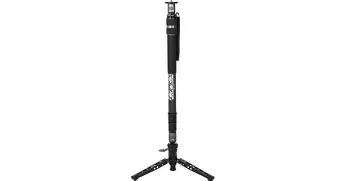
First impressions: the Sirui Svm 145P felt solid in hand right out of the box. The finish and machining are clean, and it has a reassuring heft without being heavy. I used it primarily for event coverage and handheld tracking with a mirrorless body and a 24–70mm or 70–200mm lens on occasion. I also paired it with a lightweight gimbal head for wildlife practice.
Build quality and design
In my experience, the build quality is a clear strength. The sections extend smoothly and lock predictably. The foot/rubber base is replaceable, which I appreciated after several gritty outdoor sessions. The monopod's shoulder rest and hand grip (if you buy that accessory) make long handheld days less tiring. I liked the simple, tool-free setup — it’s fast to deploy and collapse when I need to move from spot to spot.
Performance in the field
What I found was that the Sirui gave me a very practical balance between freedom of movement and stability. For event work, I could track people and still get usable 1/30–1/60s shots with a 70–200mm when I braced against the monopod and used controlled panning. For video, panning and tilting were smoother than handheld and felt more natural than a tripod-based pan rig for run-and-gun situations.
One thing that bothered me: when used with heavier camera+tele lens combos for extended periods, I noticed more flex than I'd like. It didn't catastrophically fail, but the top section had a perceptible wobble under sustained pressure. I compensated by lowering the extension and keeping the setup closer to my body.
Compatibility and accessories
I ran a few tests with quick-release plates and a small ball head. The Sirui accepts standard plates and the clamp works fine, but if you screw a heavy ball head on, the top can become a weak point for heavier telephoto work. I liked the fact that it mates well with gimbal heads when I wanted to practice bird tracking from a field edge.
Longevity and maintenance
After months of outdoor use, a few kicks and some sand, the locks still functioned. I did have to clean grit out of the lower sections once; after that the twist/lever locks worked smoothly again. If you're planning beach or desert use, expect to schedule a basic maintenance clean every few months.
Sirui Svm 145P — pros & cons
- Pros: Fast to deploy, comfortable for long handheld sessions, good build quality, pairs well with gimbal heads, replaceable rubber foot.
- Cons: Noticeable flex with very heavy telephoto setups, can need occasional cleaning in sandy conditions, not ideal for long static exposures.
Dwarflabs Dwarf III — my detailed review
The Dwarflabs Dwarf III was the compact solution I bought for travel and backpacking. I wanted something that could fold small, be very lightweight, and yet offer usable stability for long-exposure landscapes and nightscapes. I took it on four multi-day trips and used it extensively in city nights and coastal dawn shoots.
Find top-rated Cameras & Photography products at great prices.
See Deals →Build quality and design
The Dwarf III feels refined. The legs have a tactile click and there's a precision to the joints that screams careful engineering. The folded length is tiny compared to traditional tripods, and I could easily stash it in a small daypack or strap it to a camera bag. The carbon-fiber (or carbon-style) legs are stiff, and the leg locks are intuitive. I liked the compactness so much that I used it on a shoulder bag instead of a bulky travel tripod on several flights.
Performance in the field
In practice, the Dwarf III impressed me on static work. For long exposures at night — think 10–30 seconds — it held my mirrorless bodies rock solid when I kept the center column retracted and spread the legs decisively. It’s not a full-sized tripod, so I tempered expectations: with a very long telephoto or heavy rig it became close to its limit, but for landscapes, cityscapes, and self-portraits it was fantastic.
I was surprised by how stable it felt on uneven terrain when I set the legs wide and used a small weight hook. Small adjustments were precise, and the included mini ball head (if you get a kit) is handy for quick composition. One frustration: the low-profile ball head that often ships with compact tripods can feel fiddly when gloved or in cold conditions. I ended up swapping it for a slightly larger head for comfort.
Portability and travel use
This is where the Dwarf III shines. I took it through crowded streets, across ferry rides, and up rocky paths. It never felt like dead weight. I enjoyed being able to set it up quickly and get a level shot without wrestling with a center column or large spreader. Packing-wise, it created no friction with my travel routine — I actually used it more often than my larger tripod because of that.
Dwarflabs Dwarf III — pros & cons
- Pros: Extremely portable, surprisingly stable for its size, precise leg adjustments, excellent for travel and nightscapes.
- Cons: Limited payload for very heavy setups, small included head can be fiddly, less forgiving on very soft ground unless weighted.
Side-by-side comparison
| Feature | Sirui Svm 145P Monopod | Dwarflabs Dwarf III |
|---|---|---|
| Primary use | Mobile support for tracking, events, and run-and-gun video | Compact tripod for travel, landscapes, and long exposures |
| Portability | Very portable; quick to deploy | Extremely portable; folds very small |
| Stability (real-world) | Good for mid-weight systems; some flex with heavy telephoto loads | Very solid for small-to-medium mirrorless setups on static shots |
| Best for | Events, video panning, handheld support | Travel, nightscapes, landscapes, minimal carry kits |
| Head included | Usually none; works with standard quick-release plates and heads | Often sold with a small ball head; I recommend upgrading for comfort |
| Ease of use | Fast and intuitive once you learn the controls | Simple to set up and level; head adjustments may be small |
| Maintenance | Needs occasional cleaning in gritty environments | Easy to keep clean; joints resist grit well but watch for salt/water |
| My rating (practical) | 4/5 for event/video work | 4.5/5 for travel and landscape work |
How I used them together
I didn't treat these as competitors in my kit; they complemented each other. On a family weekend I took the Sirui Svm 145P to an outdoor party to track kids around and steady my video clips. Later that night, when the skies cleared, I swapped to the Dwarflabs Dwarf III for some star trails and long-exposure city photography. That workflow — monopod for motion, compact tripod for stillness — is how they earned their place in my bag.
Buying guide — which one should you pick?
Here are some questions I asked myself before buying and how I’d advise you to think through them based on what I learned.
1. What do you shoot most?
If your work is constantly on the move — events, weddings, sports, or run-and-gun video — a monopod like the Sirui Svm 145P will make your life easier. In my experience it cuts fatigue and provides the kind of dynamic support that a tripod can't when people are moving around.
If you shoot travel, landscapes, nightscapes, or need to get sharp, stable long exposures without lugging a full tripod, the Dwarf III is a real time-saver. I used it everywhere I would have otherwise left a big tripod at home.
Looking for the best Cameras & Photography deals on Amazon?
Browse Now →2. How heavy is your usual setup?
Think about your heaviest commonly-used lens. Both of these are fine for mirrorless bodies and small-to-medium zooms. If you plan to mount a very heavy telephoto, you'll want to be cautious: the Sirui will give better mobility under those loads with a suitable head, but you may notice flex; the Dwarf III will reach its limits quickly with heavy glass.
3. How important is packability?
If you need something that fits in a carry-on or daypack and never gets in the way, the Dwarf III's small folded length and light weight make it the clear choice. I found myself using it more simply because it was easy to bring along.
4. Do you care about quick panning and video?
For video work where smooth, controlled panning is important, the Sirui monopod provides a fluid support point that is more intuitive than a tripod for motion. I prefer it for handheld video sequences where I don't want to set up a larger rig.
5. What head will you use?
Both tools benefit from pairing with the right head. The Sirui works well with gimbal and fluid heads when you need motion control; the Dwarf III is often sold with a small ball head, but I recommend upgrading to a more comfortable ball head if you frequently adjust composition or use gloves.
Accessories I recommend (from experience)
- For the Sirui Svm 145P: a lightweight gimbal head for wildlife, a comfortable wrist/shoulder strap, and a spare rubber foot.
- For the Dwarflabs Dwarf III: an upgraded ball head with an ergonomic knob, a small bag to protect the folded tripod, and a weight hook for windy nights.
Final thoughts and conclusion
After six months of regular use, both the Sirui Svm 145P monopod and the Dwarflabs Dwarf III have earned steady spots in my kit for different reasons. The Sirui is my go-to when I need to move quickly, follow subjects, or shoot video with more controlled motion; it's fast to deploy, comfortable for long sessions, and noticeably reduces fatigue during events. The Dwarf III is the traveler's dream — tiny, reliable, and surprisingly steady for long exposures and landscapes. I used it more than I expected simply because it was never a burden to bring along.
My practical recommendation: if you must pick one, decide whether your priority is motion support or pack-and-go stability. Choose the Sirui if you shoot dynamic subjects and video; choose the Dwarf III if you travel light and want a true compact tripod that still gives you solid long-exposure performance. If your budget and bag allow both, you'll find they complement each other beautifully — one stabilizes motion, the other stabilizes stillness. That's been my experience, and that's why they're both still in my camera bag today.